Hadrian's Wall: The Oldest and Most Humbling Thing I Have Ever Touched
/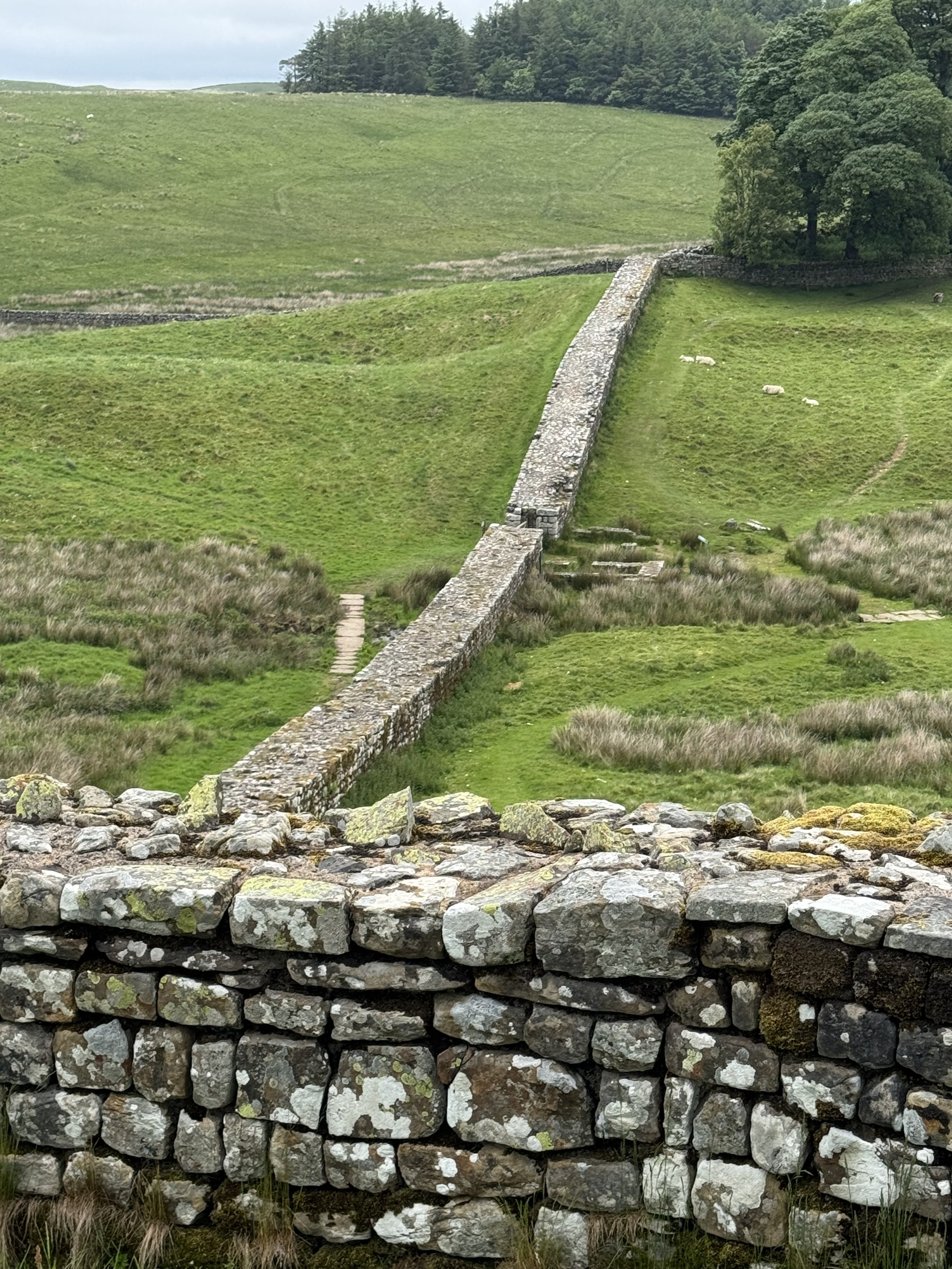
Picture by RDK
This summer, my family and I took a trip that had been a goal of ours the last few years: Britain.
We started in Edinburgh, Scotland, and made our way south by car toward London, taking our time to experience as much of the countryside and history as we could along the way. There were castles, ancient villages, winding roads through the hills, and more history than I could absorb in a single trip.
But there was one stop that affected me more than any other. Hadrian's Wall.
I've visited plenty of historic sites before. In fact, earlier in the trip, while touring the Scottish Highlands, our bus passed an old Roman gate. It was incredible to see, but we never got off the bus. I admired it through the window, snapped a picture, and we continued on our journey. Hadrian's Wall was different. I was able to stand beside it. I was able to place my hand on stones that Roman soldiers had once walked past nearly two thousand years ago. It remains the oldest thing I have ever touched.
That simple act was far more emotional than I expected.
The wall was ordered by the Roman Emperor Hadrian around A.D. 122. Stretching roughly 73 miles across northern England from coast to coast, it wasn't built simply to keep invaders out. It marked the northern frontier of the Roman Empire, controlled trade and travel, and demonstrated Rome's unmatched engineering and military power.
Imagine what it must have looked like nearly two thousand years ago. Thousands of soldiers stationed in forts along the wall. Watchtowers stretching across the hills. Roads connecting military outposts. Supply wagons moving back and forth. It wasn't just a wall. It was a declaration. Rome is here.
The section of Hadrian's Wall we visited also included the remains of a Roman temple. Today, only the stone foundations and portions of the walls remain. You have to use your imagination to picture the columns, roof, decorations, and people who once gathered there. It must have been magnificent in its day, a place where soldiers and travelers sought favor from the gods before continuing along the empire's frontier. Now it sits quietly beneath the English sky. No ceremonies. No armies. No emperors. Only ruins.
One of my favorite moments wasn't actually part of the history lesson. It was looking across the rolling green hills and realizing who truly owns Hadrian's Wall today.The sheep. They wander across the same landscape where Roman legions once marched. They graze beside stones that once represented one of the most powerful civilizations in human history. Visitors come and go. The sheep stay. There was something strangely peaceful about that. Nature doesn't care about empires. Eventually, it reclaims everything.
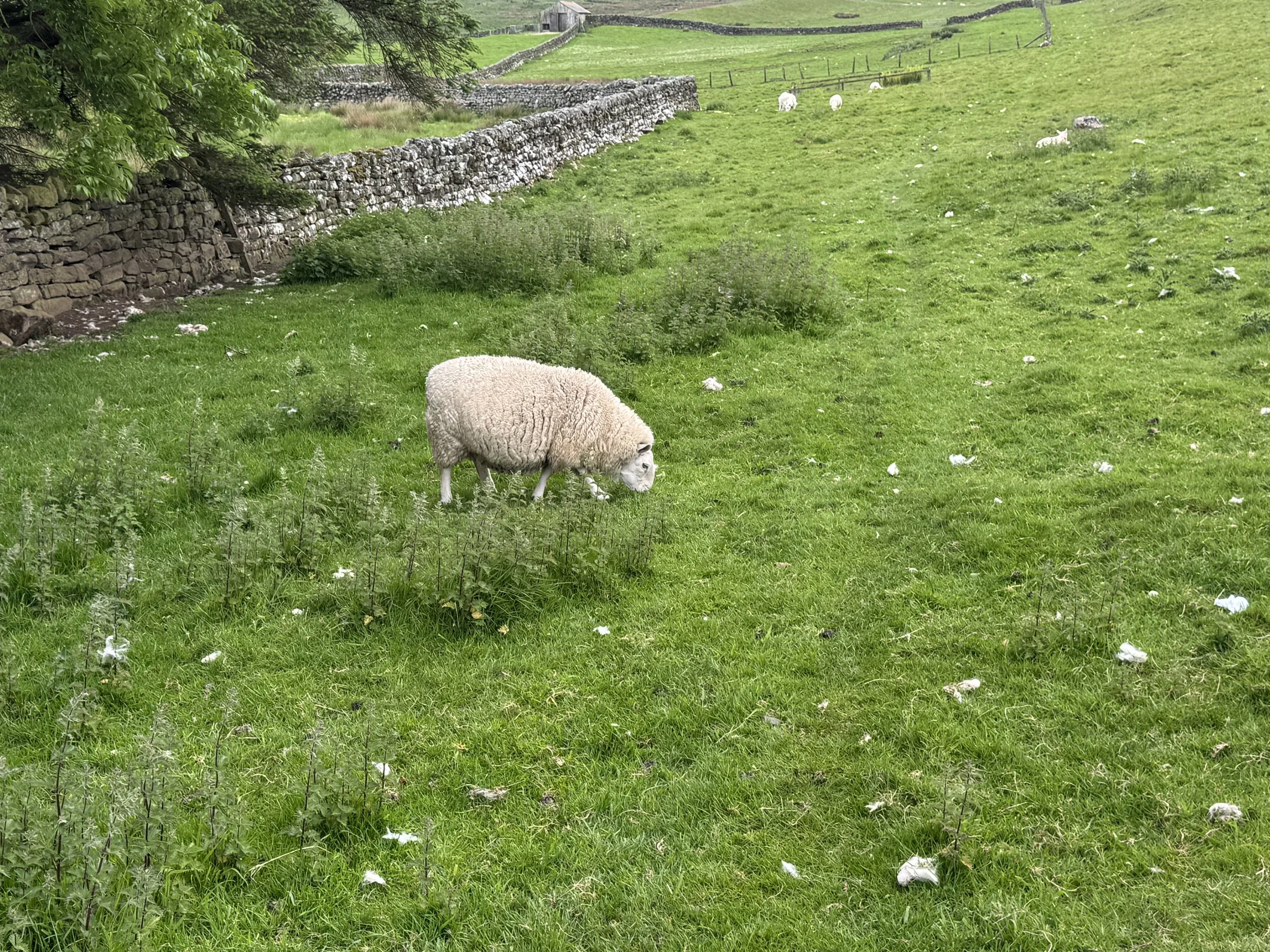
Picture by RDK
Standing there, I couldn't help but think of Percy Bysshe Shelley's famous poem Ozymandias.
"Look on my Works, ye Mighty, and despair!"
The poem tells the story of a once-powerful king whose monuments have crumbled into the desert, leaving behind only fragments and the arrogance carved into stone. Hadrian's Wall isn't identical to Ozymandias, but it evokes many of the same feelings. Rome believed it was building something permanent. Its engineers probably assumed this wall would stand forever as proof of Roman greatness. Today, much of it has disappeared. Stones have been taken over the centuries to build homes, churches, and farms. Great forts have become archaeological sites. Magnificent buildings have been reduced to outlines in the grass.
Time has a way of humbling us all.
Touching Hadrian's Wall made me think about legacy. We often measure success by what we build—our careers, businesses, homes, achievements, or even monuments. History reminds us that none of those things are guaranteed to last forever. Even the Roman Empire eventually faded. Its greatest engineering projects fell into ruin. Its armies disappeared. Its emperors became names in history books.
Yet something did survive.
The ideas. The influence. The roads that shaped Europe. The legal systems. The engineering knowledge. The language. The stories.The people who made life better for those around them.
Maybe that's the real lesson.
Our buildings may crumble. Our names may eventually be forgotten. But the kindness we show, the people we help, the communities we strengthen, and the lives we change can echo far longer than stone walls ever could.
Of all the places we visited on our journey from Edinburgh to London, Hadrian's Wall left the deepest impression on me. Not because it was the grandest attraction. Not because it was the most beautiful. But because it reminded me just how small we are in the grand timeline of history—and how meaningful our actions can still be. For a brief moment, I rested my hand on stones laid by people who lived nearly twenty centuries before me. The wall may no longer mark the edge of an empire. The temple may stand in ruins. The sheep may now rule the hills. But the lessons of that place remain as solid as the stones themselves. History lives on. And while our greatest structures may one day fade into the landscape, the good we do for others has a chance to become something far more enduring.
That's a legacy worth building.
RD
RD is the founder and Head Editor for SeedSing and the other host of the X Millennial Man Podcast.
Come and support us and the podcast on Patreon.
SeedSing is funded by a group of awesome people. Join them by donating to SeedSing.